It’s easy to get lost in the noise. Last week, the digital ticker tape was bleeding red for Hims & Hers Health, with shares tumbling a dramatic 15%. The headlines, predictably, were breathless. Titles like Hims & Hers Health (HIMS) Stock Tanks 15% after CEO Discloses Stock Sale set a simple, scary, and seductive narrative: the CEO is dumping stock, a political storm is brewing over drug prices, and the ship is taking on water.
When I saw the headlines, I honestly had to laugh. Not out of malice, but because the reaction felt so predictable, so utterly focused on the wrong part of the story. Wall Street, in its infinite wisdom, was staring at the shadow on the cave wall and declaring it a monster, all while missing the incredible event casting the shadow in the first place.
This isn't a story about a bad day on the stock market. It’s a story about a monumental shift in how we manage our own health, and the inevitable, chaotic turbulence that comes with any true revolution. The panic you’re seeing isn't a sign of failure; it’s the sound of an old world cracking apart.
The Anatomy of a Panic
Let’s first dissect the fear, because understanding it is key to seeing past it. The first trigger was the news that CEO Andrew Dudum sold over $40 million in shares. On the surface, that looks bad. A captain abandoning ship, right? The market certainly thought so.
But dive one layer deeper, and the story changes completely. A significant portion of that sale was executed under a Rule 10b5-1 trading plan. What does that mean? In simpler terms, it’s a pre-scheduled, automated trading arrangement that executives set up months, sometimes years, in advance to sell a portion of their holdings at a predetermined time or price. It's the opposite of a panic button; it's a carefully planned financial strategy for diversification, tax planning, or any number of personal reasons that have nothing to do with a sudden loss of faith in the company.
To see a pre-planned sale and scream "insider panic!" is like watching someone make a scheduled withdrawal from their 401(k) and assuming they're about to go bankrupt. It's a fundamental misreading of the data, driven by a thirst for drama over diligence. Are we, as investors and observers, so conditioned to look for the worst-case scenario that we’ve forgotten how to read the fine print? What does it say about our collective anxiety when routine executive compensation becomes a harbinger of doom?
The second shockwave came from the political arena. Former President Trump remarked that he’d negotiate the prices of popular GLP-1 weight-loss drugs—the category Hims & Hers plays in—to be "much lower." The market shuddered, envisioning squeezed profit margins and a crippled business model, a reaction captured in headlines like Hims & Hers Health stock falls after Trump promises lower weight loss drug prices By Investing.com. Again, the fear is understandable. But it’s also remarkably shortsighted.
The Signal Hiding in the Noise
Instead of asking, "Will lower prices hurt the bottom line?" the far more important question is, "Why is this even a topic of presidential-level discussion?" The answer is the real story here. These treatments, and the platforms that make them accessible, have become so culturally and economically significant that they are now a political football. This isn't a threat; it's a validation.
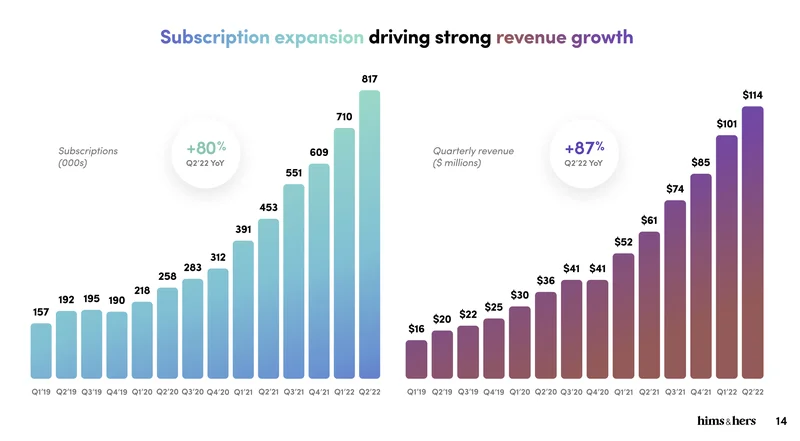
This is the kind of breakthrough that reminds me why I got into this field in the first place. We're witnessing the consumerization of healthcare on a scale we've never seen before—it's a paradigm shift so profound that it’s shaking the foundations of the pharmaceutical, insurance, and political industries all at once. The demand isn't just high; it's a societal tidal wave. And Hims & Hers, with its telehealth platform, is standing right in the path of that wave with a surfboard.
Think about the historical parallel. This is not unlike the dawn of the personal computer. In the beginning, computers were the domain of massive corporations and government labs. They were expensive, inaccessible, and intimidating. Then, companies like Apple and Microsoft came along and put that power on every desk. They democratized it. Hims & Hers is doing for specialized healthcare what the PC did for computing. They are taking treatments that were once locked behind specialist appointments, insurance gatekeepers, and social stigma and putting them directly, discreetly, and affordably into the hands of millions.
Of course, this democratization comes with immense responsibility. As these platforms grow, the ethical imperative to ensure patient safety, provide high-quality care, and maintain medical integrity becomes paramount. The goal must be to empower patients, not just to create customers. But the potential here is staggering. Imagine a world where proactive health management is as easy as ordering a book online. That's the future these companies are building.
The stock market’s recent jitters aren't a reflection of the company's core mission or its potential. They are the tremors of a dying system. A system built on friction, opacity, and inaccessibility is being challenged by one built on convenience, transparency, and empowerment. The noise from the stock tickers and the political podiums is just the sound of that tectonic collision.
Don't Mistake the Tremors for the Collapse
Let’s be perfectly clear. The market panicked because it saw short-term risk and ignored the long-term revolution. It fixated on a planned stock sale and a politician’s soundbite while completely missing the bigger picture: the demand for accessible, personalized healthcare is an unstoppable force. Hims & Hers isn't just selling products; it's building the infrastructure for a new era of wellness. The recent stock drop isn't a red flag. It’s a beautifully human, fear-driven, and ultimately temporary reaction to a change that is anything but.