The Great Reboot: Why Gold's Chaos Isn't About Money, It's About the Code of Trust
---
I want you to forget everything you think you know about gold. Forget the images of dusty treasure chests or old men panning in a river. For the past few weeks, as headlines like Gold price today, Friday, October 24: Gold opens at $4,144 after Trump ends trade talks with Canada screamed about gold futures smashing through $4,000 an ounce, I’ve seen people react with either panic or greed. They’re missing the point entirely. When I first saw the data—the wild 5% daily swings, the talk of a new all-time high at $4,398, the geopolitical turmoil fueling it all—I honestly just sat back in my chair, speechless. But it wasn't the price that floored me. It was the why.
What we’re witnessing isn’t a simple market rally. It’s a system-wide diagnostic check, and the results are flashing red across the board. The global financial operating system, the code that has governed our world for the better part of a century, is starting to throw critical errors. Think of it like a computer program that’s been running for too long, accumulating bugs and memory leaks until it becomes unstable. The U.S. national debt hitting a staggering $38 trillion, a government shutdown halting the flow of basic economic data, and a trade war being waged via social media posts—these aren't just headlines. They are symptoms of a system under immense strain.
Gold’s chaotic surge is the system trying to reboot into safe mode. It’s the raw, analog protocol we fall back on when the sophisticated digital one—the one based on trust in institutions and governments—begins to fail. So, the real question isn't "How high can gold go?" The question we should be asking is, "What kind of system will emerge when this reboot is complete?"
The Cracks in the Global Operating System
For decades, the world has run on a surprisingly simple protocol: the U.S. dollar and, by extension, the perceived safety of U.S. government debt. It was the bedrock layer, the TCP/IP of global finance. But what happens when the central node in that network starts to look unreliable? We're finding out in real-time. With the Federal Reserve forced to cut interest rates even as inflation runs hot, and with its balance sheet swelling to absorb government debt that no one else wants, the core promise of stability is eroding.
This isn't some abstract economic theory. We're seeing major players actively migrating away from the old network. When nations like China and Japan, the largest foreign holders of U.S. debt, become net sellers, they aren't just rebalancing a portfolio. They are consciously diversifying their reliance on a single, centralized authority. They're looking for a new protocol.
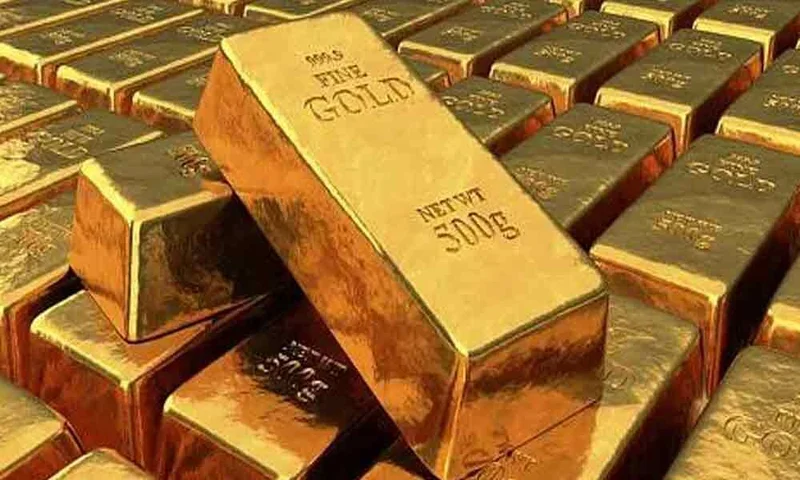
This is where gold re-enters the picture, not as an investment, but as an arbiter of trust. It’s a distributed, universally accepted ledger of value that requires no central authority to validate it. Its code was written by the laws of physics, not by politicians. As trust in the man-made system falters, demand for the physics-based one skyrockets. The recent volatility, the margin calls, the panic-selling—that’s the friction you get when a massive global network tries to shift its foundational layer. It’s messy, unpredictable, and absolutely necessary. Is it possible that we’ve taken the stability of our financial architecture for granted for so long that we’ve forgotten how fragile it truly is?
Rewriting the Rules: London's Audacious Plan
Amidst this chaos, something truly fascinating is happening. It’s a move that most of the mainstream press is covering as a simple business story, but I see it as something far more profound. Peter Zoellner, the new chair of the London Bullion Market Association (LBMA), has called for the revival of gold futures trading in London. On the surface, this move—detailed in reports like New LBMA Chair Zoellner wants to add gold futures to $35 trillion UK physical market – FT—is an attempt to challenge the dominance of U.S. exchanges like the Comex. But look deeper. It’s an attempt to build a redundant financial node.
A futures market is a complex machine, but its function is simple. It’s a mechanism for price discovery and risk management—in simpler terms, it’s a global conversation that helps everyone agree on what something is worth tomorrow. For years, that conversation has been hosted primarily in New York. Zoellner’s proposal is a declaration that the world needs more than one host. This isn't just about trading floors and contracts, it's about a fundamental architectural shift away from a single point of failure and towards a distributed consensus of trust where value can be priced and exchanged independent of one nation's political whims—it's the financial equivalent of moving from a mainframe to the cloud!
This reminds me of the original design philosophy behind ARPANET, the precursor to the internet. It was built as a decentralized network precisely so it could withstand a major attack on any single node. The financial world is now, out of necessity, learning the same lesson. Building "two or three places with decent liquidity," as Zoellner puts it, isn't about competition. It's about resilience. It’s the first step in architecting a global financial system that is more robust, more transparent, and less susceptible to the political shocks emanating from any one country. What other aspects of our centralized world, from supply chains to data networks, are quietly being redesigned right now for this new, less certain era?
I was scrolling through a forum the other day, and a comment caught my eye. Someone wrote, "Everyone is scared of the system breaking. I'm excited for what we build to replace it." That perfectly captures the spirit of this moment. Yes, there's a moment of ethical consideration here; transitions like this can be painful for those caught unprepared. We have a responsibility to design the next system to be more inclusive and stable than the last. But we can't let that fear paralyze us.
The surge in gold miners' profits, the undervalued junior explorers waiting in the wings—these are just the early-stage startups of this new financial ecosystem. They are the toolmakers and prospectors laying the groundwork for what comes next.
This Isn't an Ending, It's a Compilation
What we're seeing in the gold market isn't the end of a story. It's the system compiling a new version of itself, and right now, we're just watching the code scroll by—fast, chaotic, and full of error messages. The volatility is a feature, not a bug. It’s the messy, beautiful, and terrifying process of debugging a multi-trillion-dollar global operating system in real-time. The real breakthrough here isn't a new technology; it's the rediscovery of an ancient one, and more importantly, the realization that the future of trust cannot, and will not, be centralized. We are at the very beginning of building that future. And I, for one, can't wait to see the final build.