Here’s why you might be getting a bigger tax refund next year—and what it really tells us about the future.
I’ve spent my career obsessed with systems. How they work, how they break, and how we can build better ones. From the elegant logic of a neural network to the chaotic beauty of a thriving city, I’m fascinated by the invisible architecture that shapes our lives. And right now, one of the biggest, most archaic systems we all interact with is flashing a giant, $50 billion error message.
You may have seen the headlines: Americans may get bigger tax refunds next year, economic study finds. On the surface, it sounds like a lottery win, a surprise bonus from Uncle Sam. The Trump administration is certainly framing it that way, a direct cash injection for working families. But when I dug into the research from Oxford Economics, I saw something entirely different. This isn't a story about a generous government. This is a story about a system that is fundamentally out of sync with the speed of modern life.
This is the kind of breakthrough that reminds me why I got into this field in the first place—not for the gadgets, but for the potential to redesign the very fabric of our society for the better. The coming wave of tax refunds isn't a gift; it's a ghost in the machine, a clear signal that the analog architecture of our government is groaning under the weight of a digital world.
The Software Patch Nobody Installed
Think of it like this: The government released a major operating system update for your financial life back in July. This update, the 940-page "One Big Beautiful Bill Act," introduced a slate of new features—no tax on tips or overtime, a new "senior bonus," a higher cap on state and local tax (SALT) deductions. The catch? The update was retroactive, meaning it applied to the entire 2025 year, even the months before the law was passed.
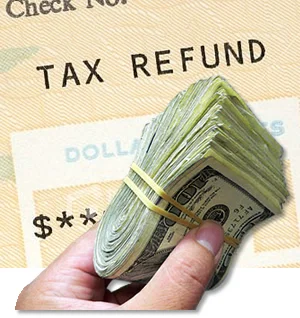
Here's where the system breaks down. Most of us pay our taxes through withholding. Withholding is, in simpler terms, the automatic payment plan you have with the IRS, where your employer estimates your annual tax bill and deducts a piece of it from every paycheck. It’s a set-it-and-forget-it system that relies on stable, predictable rules. But when the rules change dramatically in the middle of the year, the system doesn't automatically adapt.
The IRS, the central processor for this entire operation, hasn't updated its public withholding tables—the core code that employers use to make these calculations. Its own online estimator has a notice saying the info is out of date. The result is that for months, millions of Americans have been operating on the old software, overpaying their taxes based on rules that no longer exist. This collective overpayment is what’s projected to become a staggering $50 billion in larger-than-expected refunds. We’ve essentially been giving the government a massive, interest-free loan. Why, in an age of instant transactions and algorithmic finance, does our core financial relationship with the government still operate on a year-long delay with this much friction?
A System Crying Out for an Upgrade
The official advice from the IRS is for taxpayers to "review your withholding manually or consult a tax professional." When I read that, I honestly just sat back in my chair and shook my head. That isn't a solution; it's an admission of a catastrophic user-experience failure. Asking tens of millions of people to become amateur tax accountants to fix a systemic lag is like a car manufacturer telling you to manually adjust the engine timing every time you change highways. It’s an absurd burden to place on the user.
This is where my frustration turns into excitement, because the problem illuminates the path forward so clearly. We live in a world where fintech apps can rebalance our investment portfolios in microseconds based on global market shifts, yet our government’s financial plumbing is so creaky it takes more than a year to implement its own laws correctly. Imagine a system that could dynamically adjust your withholdings in real-time based on new legislation, a system so intuitive it felt less like filing a form and more like a conversation, providing clear, simple choices—that’s not science fiction, that’s just applying the technology we already have to one of the most fundamental parts of our civic lives.
There’s also a crucial ethical dimension here. A complex, opaque system always benefits those with the resources to navigate it. The new, higher $40,000 SALT deduction cap, for example, disproportionately benefits higher-income households in high-tax states—the very people who are more likely to have a CPA on call to help them adjust their W-4 immediately. Meanwhile, a tipped worker or an hourly employee working overtime is left to navigate the bureaucratic maze alone, effectively spotting the government money they could be using right now. What does it say about our priorities when the system’s inefficiencies create one reality for the wealthy and another for everyone else?
More Than a Refund, It's a System Diagnostic
So when that bigger-than-expected check from the IRS arrives in your account next spring, don't just see it as a windfall. See it for what it truly is: a receipt for inefficiency. It’s the cost of running a 21st-century society on 20th-century infrastructure. This isn't a political failure or victory; it's a design problem. The real opportunity isn't the few extra hundred or thousand dollars you'll get back. The real opportunity is to finally ask why that money was ever taken in the first place and to demand we build a smarter, more responsive, and more equitable system for tomorrow.