The Stimulus Mirage: Deconstructing the Data Behind Your Next Government Check
A persistent data anomaly is circulating online. It manifests as social media posts and dubious headlines promising a fourth stimulus check, with figures like $1,390 or even $2,000 being floated. The virality of these claims is, from an analytical standpoint, fascinating. It points to a deep-seated public expectation, a hope for a simple, direct cash injection from the government. But when you strip away the anecdotal noise and look at the actual data streams from the IRS and Congress, a completely different picture emerges. The signal is not just weak; it’s non-existent.
Let’s be precise. There is no fourth federal stimulus check. The COVID-era programs that sent three rounds of direct payments are concluded. The final deadline to claim the third payment (the $1,400 Recovery Rebate Credit for the 2021 tax year) was April 15, 2025. That window is closed. Any unclaimed funds from that period have been absorbed back into the U.S. Treasury. The mechanism is defunct.
Of course, political proposals exist. Senator Josh Hawley’s “American Worker Rebate Act” is a legislative concept, not a funded reality. Former President Trump has floated ideas about tariff rebates and a so-called “DOGE dividend.” These are trial balloons, designed to gauge public sentiment. They are not policy. Treating them as imminent payments is a fundamental misreading of the legislative process—akin to valuing a company based on a founder’s optimistic tweet rather than its balance sheet. The hard data indicates that the era of universal, no-strings-attached payments has ended. The public’s continued search for it is a classic case of looking for a pattern in random noise.
So, if a broad stimulus check isn't coming, what is the reality of government money flowing to individuals? The answer is far more complex, fragmented, and frankly, less exciting. The flow of funds has shifted from a firehose to a series of eyedroppers, each aimed at a very specific target.
The New Anatomy of a Payout
The most common "check" anyone will receive from the government is, of course, their own money. A standard federal tax refund is not a stimulus; it’s the settlement of a year-long, interest-free loan you gave to the Treasury. The IRS’s “Where’s My Refund” tool is the primary interface for this transaction, a process that is routine for millions but a far cry from a net economic injection.
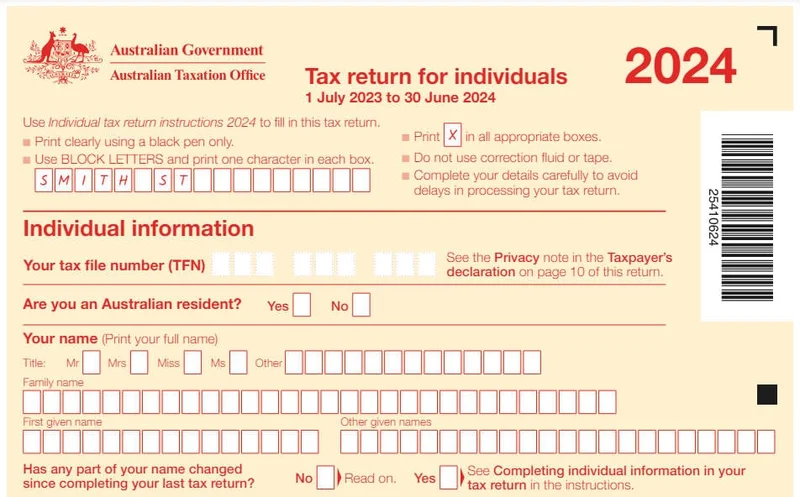
Beyond that, the landscape splinters. We see state-level programs like New Jersey’s ANCHOR, which offers property tax relief to homeowners and renters based on specific age and income brackets. We see targeted "inflation relief" payments in states like New York and Pennsylvania, but again, these are not universal. They are means-tested and designed to offset specific economic pressures on a subset of the population. The amounts are modest, typically a few hundred dollars. Then there's the most targeted relief of all: disaster assistance. A recent example is how the IRS offers tax relief for those impacted by Halong, providing filing extensions to residents and businesses in just three specific educational attendance areas in Alaska. This is a surgical intervention, not a national program.
I've looked at hundreds of these state-level and federal relief programs over the years, and the primary trend is an exponential increase in complexity. The eligibility requirements are a labyrinth of income thresholds, residency rules, and filing deadlines. It’s less of a safety net and more of an administrative obstacle course.
This complexity creates a critical market failure, and into that gap steps an organization like the United Way. Their Volunteer Income Tax Assistance (VITA) program is perhaps the most telling piece of data in this entire puzzle. Think about what it represents: the tax code and its associated credits—like the Earned Income Tax Credit and Child Tax Credit—are so convoluted that a national non-profit must recruit and train an army of volunteers just to help low- and moderate-income households navigate the system to get the money they are legally owed. Local chapters are constantly seeking volunteers to be trained as IRS certified tax return preparers.
Last tax season, these VITA volunteers prepared about 8,500 tax returns, securing nearly $11 million in refunds nationwide for qualifying families. To be more exact, some reports place the national figure closer to $10.8 million, but the core point is unchanged. This isn't stimulus money; it's a recovery effort. It’s the financial equivalent of a search-and-rescue team going into a bureaucratic jungle to pull out trapped funds. The very existence of this program, and its scale, is the clearest signal that the government's financial relationship with its citizens has fundamentally changed. We've moved from passive receipt to a system that demands active, often professionally-assisted, pursuit. The question is, how many people without access to a VITA volunteer simply leave that money on the table? That’s a data point we unfortunately don’t have.
A Correction to the Mean
The disconnect between public expectation and fiscal reality is now a chasm. People are waiting for helicopter money in an era of forensic accounting. The hard truth is that the most significant check you're likely to get from the government is a refund of money you overpaid, and you may need a trained volunteer to help you find it. The narrative of easy, universal stimulus was an outlier, a temporary deviation driven by a global crisis. What we are experiencing now is not a pause; it's a regression to a much more complex, targeted, and demanding mean. The signal has shifted, and our collective expectations need a significant data correction.