Generated Title: Amazon's AI Gamble: Genius Move or $38 Billion Bubble?
Amazon's stock is popping, analysts are ecstatic, and the headlines scream "AI revolution." But let's pump the brakes for a second and look at the actual numbers behind Amazon's latest $38 billion deal with OpenAI. Is this a stroke of genius, or are we watching a tech bubble inflate in real-time?
The AI Infrastructure Arms Race
The narrative is simple: OpenAI needs compute, Amazon has compute, therefore, Amazon wins. On the surface, it makes sense. OpenAI, flush with cash (or at least the promise of future cash from Microsoft), is burning through resources at an alarming rate. Sam Altman himself has talked about the insatiable need for "more compute and energy." Amazon, eager to solidify its lead in the cloud, is happy to oblige, providing access to "hundreds of thousands of state-of-the-art NVIDIA GPUs."
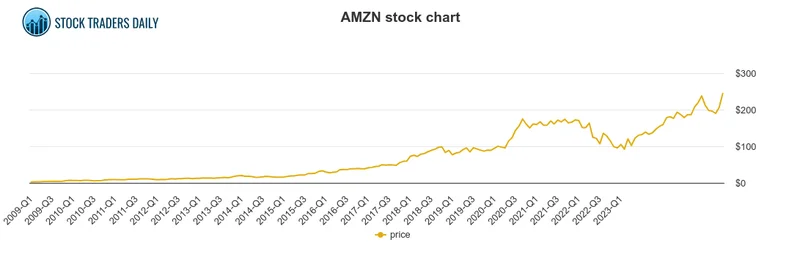
The deal sent Amazon's stock up roughly 5% on Monday morning, and analysts are tripping over themselves to raise price targets. Citizens JMP and Piper Sandler both bumped their targets to $300, citing robust growth and favorable guidance. Citi's Ronald Josey went even further, raising his target to $320 and reaffirming Amazon as his top internet stock pick.
But here's where my skepticism kicks in. (I've looked at enough earnings reports to smell a rat.) This deal isn't happening in a vacuum. OpenAI has a $300 billion deal with Oracle, agreements with CoreWeave worth over $22 billion, and partnerships with Broadcom, AMD, and Nvidia. Are we seeing a genuine surge in demand, or a carefully orchestrated game of musical chairs where everyone is betting on someone else to foot the bill?
The Trillion-Dollar Question
The core issue is OpenAI's ability to actually pay for all this compute. Reports indicate OpenAI's costs are projected to surpass $1 trillion by the end of the decade. Let me repeat that: trillion, with a "t." Meanwhile, their revenue, while growing, is nowhere near that level. Even a successful IPO valuing the company at $1 trillion (a figure Reuters is floating) doesn't solve the fundamental problem of cash flow.
Where's the disconnect? The market is betting on future, hypothetical revenue streams generated by AI. It's a classic "build it and they will come" scenario, but with a potentially catastrophic twist. What if the demand for AI services doesn't materialize as quickly or as lucratively as everyone expects? What if the "holy grail" of AGI (Artificial General Intelligence) remains just out of reach, requiring even more compute and more investment?
Amazon is essentially betting $38 billion that OpenAI will be able to monetize its AI models at a rate that justifies this massive infrastructure investment. They're not alone; Microsoft, Oracle, and countless venture capitalists are making similar bets. But the sheer scale of the investment, coupled with the uncertainty surrounding AI monetization, raises serious questions about the long-term viability of this model.
And this is the part of the report that I find genuinely puzzling. AWS also said last Wednesday that it has completed a massive AI data center project and was set to provide OpenAI’s rival Anthropic with one million of its custom AI chips by the end of 2025. Are they hedging their bets? Playing both sides of the field? Or is this a sign that the demand for AI compute is truly limitless (a proposition that strains credulity)?
The circular nature of these AI deals is also concerning. OpenAI uses Nvidia chips hosted on Amazon's AWS. OpenAI also has agreements with Nvidia. Amazon also has agreements with Anthropic. It's an interconnected web of financial dependencies, and a single point of failure could send shockwaves throughout the entire ecosystem. It feels a bit like the CDO market in 2008, where everyone was betting on everyone else's success, and no one understood the underlying risk.
A House of Cards Built on GPUs?
Amazon's AI gamble could pay off handsomely. But it's crucial to acknowledge the inherent risks. The market is pricing in exponential growth in AI adoption and monetization, but that growth is far from guaranteed. If OpenAI (or any of the other major AI players) stumbles, the entire house of cards could come crashing down. The $38 billion deal isn't just an investment in compute; it's a bet on the future of AI, and the odds are far from certain.