SpaceX Just Threw Away a Rocket. Nobody Blinked.
So let me get this straight. The company that built its entire empire, its whole world-changing mystique, on the promise of reusability just took a 20-flight veteran rocket booster and chucked it into the Atlantic like a piece of garbage. And the collective response from the space-watching world was a dull, resounding… shrug.
This wasn’t some catastrophic failure. It was a choice. A deliberate, calculated decision to sacrifice a multi-million dollar piece of hardware for the sake of "performance." They didn't even bother putting the landing legs on it. Can you picture that? The Falcon 9 sitting on the launch pad at Cape Canaveral, stripped bare, looking like a soldier sent to the front lines without his armor because his superiors decided he wasn't coming back anyway. It's a bizarre choice for a company that sold us a revolution. No, 'bizarre' isn't right—it's a cold, hard reminder that the revolution was always about the bottom line, not the romance of the technology.
While this sacrificial lamb was being prepped for its one-way trip, another Falcon 9—booster B1075, also on its 21st flight—was launching Starlinks from California. That one, offcourse, came back for a perfect landing on the drone ship. It’s business as usual. So what makes one 21-flight veteran a priceless asset and another a piece of disposable trash? Is there a secret retirement age for these things we don't know about? Or is it just that when a customer with a heavy enough payload and a fat enough wallet comes along, the grand vision of reusability gets quietly tossed overboard?
This whole thing feels less like a step into the future and more like a return to the bad old days of spaceflight, where every launch was a multi-million dollar firework show with no expectation of getting anything back.
All Hail the Uber for Spy Satellites
Let’s talk about the passenger on this kamikaze flight: the SpainSat NG-2. A 6.1-ton behemoth of a satellite designed to provide "secure communications" for the Spanish government, the EU, and NATO. It’s the second of a pair, creating a network that stretches from the US to Singapore. They spent all this money for ‘secure communications’ which is just a fancy way of saying—
Spain’s Minister of Science, Diana Morant, gushed that this satellite "will place the Spanish industry at the top of Europe." I love corporate-speak. My translation? "We just spent a boatload of taxpayer money on a military-grade communications network, and this is the best justification we could come up with." It's a classic move. Wrap a massive goverment expenditure in the flag of national pride and innovation, and hope nobody asks too many questions about the price tag.
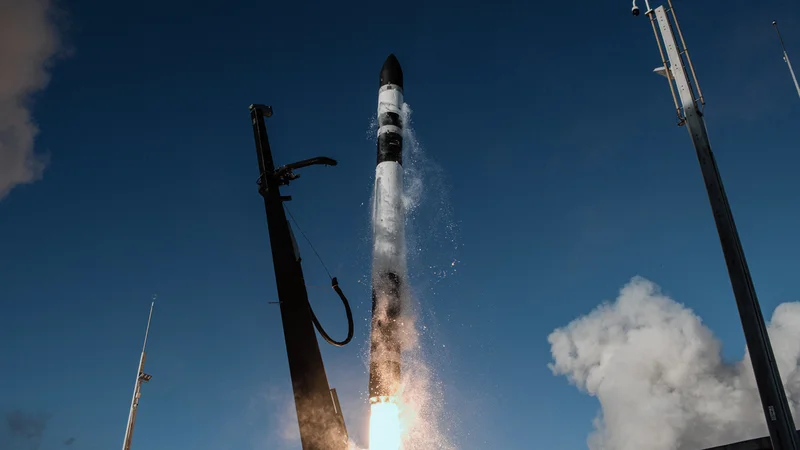
And what a price tag it must be. We don't know the exact cost of the launch contract, but we know SpaceX had to expend a booster to get it done. That ain't cheap. This rocket is like the world’s most expensive Uber, hired to take one very heavy package to a very specific address, and then instructed to drive itself off a cliff. For all the talk of lowering the cost of access to space, this mission feels like a throwback to the era of blank checks and Cold War budgets.
The SpaceX launch of SpainSat satellites from Cape Canaveral delayed until Thursday was even delayed a day for reasons SpaceX couldn't be bothered to share. "Undisclosed reasons" is the corporate equivalent of your teenager saying they were "out." It tells you nothing and everything at the same time. It’s a complete lack of transparency that we’ve just come to accept from a company that operates more like a private fiefdom than a public utility. Then again, maybe I’m the crazy one. Maybe this is just what progress looks like in the 21st century.
The Relentless, Grinding Machine
Here's the part that really gets me. This expendable mission, this anomaly, was SpaceX's 134th orbital launch of 2025. That number ties their entire launch total for all of 2024. And it's only October. They're on pace for over 170 launches this year.
Think about that. The pace is so relentless, so brutally efficient, that sacrificing a booster is just a rounding error. It's a cost of doing business. It's a footnote in a press release. The SpaceX launch machine is a firehose, and one discarded rocket is just a drop of water in an ocean of launches. They've put over 10,000 Starlink satellites into orbit. Do you really think they lose sleep over one Falcon 9 taking a dive?
This is the reality of the new space age. It’s not about elegant solutions or preserving beautiful machines. It’s an industrial operation. It's about cadence, throughput, and market dominance. The Falcon 9 booster isn't a noble ship exploring the heavens; it’s a cog in a machine, used and reused until it’s more convenient to just throw it away and grab a new one off the assembly line.
It’s hard not to feel a little deflated by it all. We were promised a future of sleek, reusable spaceships dancing between Earth and orbit. What we got is an incredibly effective, globally dominant, and utterly unsentimental logistics company. They launch rockets the way Amazon ships packages. And if a box gets damaged along the way? Who cares. Just send another one.
So, Progress Looks a Lot Like Waste
In the end, this is the story. SpaceX, the poster child for a sustainable future in space, proved that sustainability is just a feature, not a creed. It’s a setting you can toggle on or off depending on mission parameters and profit margins. The grand promise of reusability wasn't a philosophical breakthrough; it was a brilliant business model. And like any business model, it has exceptions. This mission was one of them. The revolution, it turns out, is entirely pragmatic. And frankly, a little boring.