It’s easy to get lost in the noise of AI. For years, we’ve been served a relentless buffet of "next-gen" models, each one a little faster, a little smarter, a little better at writing poems about cats in the style of Shakespeare. We’ve become accustomed to incremental progress. But every once in a while, a moment arrives that isn’t an increment. It’s a rupture. A clean break from everything that came before.
That moment was August 2025.
When OpenAI unveiled the technical details of GPT-5, I did what I always do: I dove into the whitepaper, ready to parse the benchmarks and architectural notes. But this time was different. When I saw the performance metrics—94.6% on the AIME for mathematics, 74.9% on SWE-bench for coding—I honestly just sat back in my chair, speechless. The numbers weren’t just better; they were in a different category altogether. This wasn't just another step on the ladder; it was a leap into a new building. This is the kind of breakthrough that reminds me why I got into this field in the first place, a genuine glimpse of the frontier.
What we’re looking at with GPT-5 isn’t an upgrade to a chatbot. It’s the birth of a new kind of cognitive engine.
A Mind That Can Choose Its Speed
The real paradigm shift with GPT-5 isn’t just its raw intelligence. It’s the way it thinks. For the first time, we have a unified system that can operate in two modes: a lightning-fast, intuitive mode for quick answers, and a deep, deliberate reasoning mode for complex problems. In simpler terms, it knows when to give a gut reaction and when to go away and “think” for a while, breaking down a problem step-by-step.
Think of it like this: previous AIs were like world-class sprinters. You could ask them a question, and they’d race to the finish line with an answer. But ask them to run a marathon—to tackle a multi-layered, nuanced problem—and they’d falter, running out of breath and coherence. GPT-5 is the first true decathlete. It can sprint, but it can also strategize, pace itself, and complete the marathon. It decides for itself which race it needs to run based on the problem you give it.
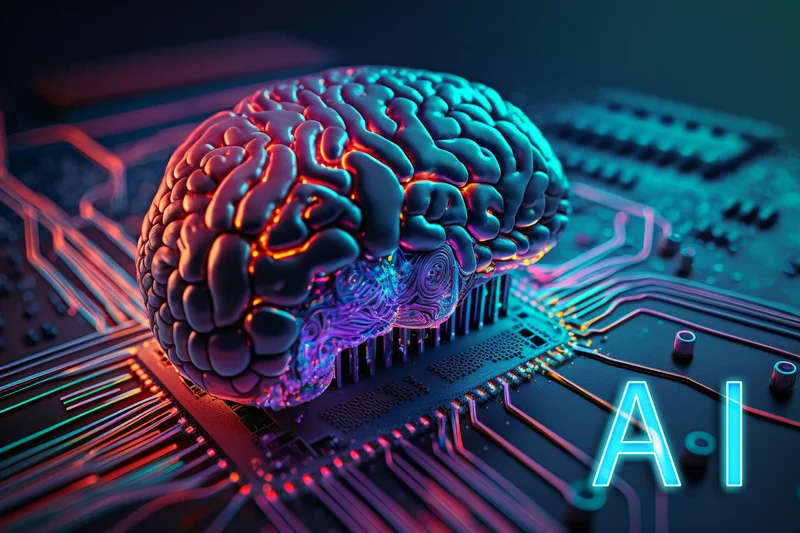
This is why it’s crushing benchmarks in everything from visual perception to advanced coding. Its ability to achieve 84.2% on the Multimodal Understanding (MMMU) benchmark means it can look at a complex medical chart, read the doctor's notes beside it, and synthesize a coherent, actionable insight—a task that requires seeing, reading, and reasoning all at once. The speed and sheer breadth of this capability is just staggering—it means the gap between a human expert and an AI assistant is closing faster than we can even comprehend, promising a future where this power is available to everyone.
But even that isn't the biggest story. The real revolution is what happens when you unchain this new kind of mind from the chat window and give it a to-do list.
Welcome to the Hybrid Workforce
OpenAI didn’t just release a model; they issued a declaration. They said they believe 2025 will see the first AI agents “join the workforce” in a material way. Let that sink in. We’re not talking about tools that help us work. We’re talking about autonomous agents that do the work.
Imagine you’re a software developer. Your new “teammate” is a GPT-5 agent. You assign it a task: “There’s a critical bug in the user authentication module. Find it, write the patch, test it across all our platforms, and submit a merge request.” You don’t give it step-by-step instructions. You give it a goal. Then you go to lunch. When you come back, the agent has not only found and fixed the bug but has also documented the entire process and flagged a potential security vulnerability it noticed along the way.
This isn’t the printing press, which allowed us to scale the distribution of human thought. This isn’t the steam engine, which scaled human muscle. This is the first technology that scales human cognition itself. What does a creative agency look like when an AI agent can generate a thousand viable ad campaigns in an afternoon? How does medical research change when an AI can analyze genomic data and formulate novel hypotheses while its human colleagues sleep?
Of course, this leap forward brings with it an immense sense of responsibility. We are standing at a crossroads, and the path we choose now will define the human-machine relationship for the next century. Our goal must be to build systems that augment our abilities, that free us from drudgery to focus on the things that are uniquely human: creativity, empathy, and strategic judgment. The aim is a true partnership, not a replacement. We have to get this right.
The Starting Line, Not the Finish Line
For all the incredible power of GPT-5, it's crucial to see it for what it truly is. This isn't the destination. It's not the apex of artificial intelligence we’ve been dreaming of for decades. It’s something far more exciting: the first real, tangible, and usable foundation for that future. We've just poured the concrete for a skyscraper we can't yet imagine. The age of AI as a passive tool is over. The age of AI as an active collaborator has just begun. And I, for one, cannot wait to see what we build together.